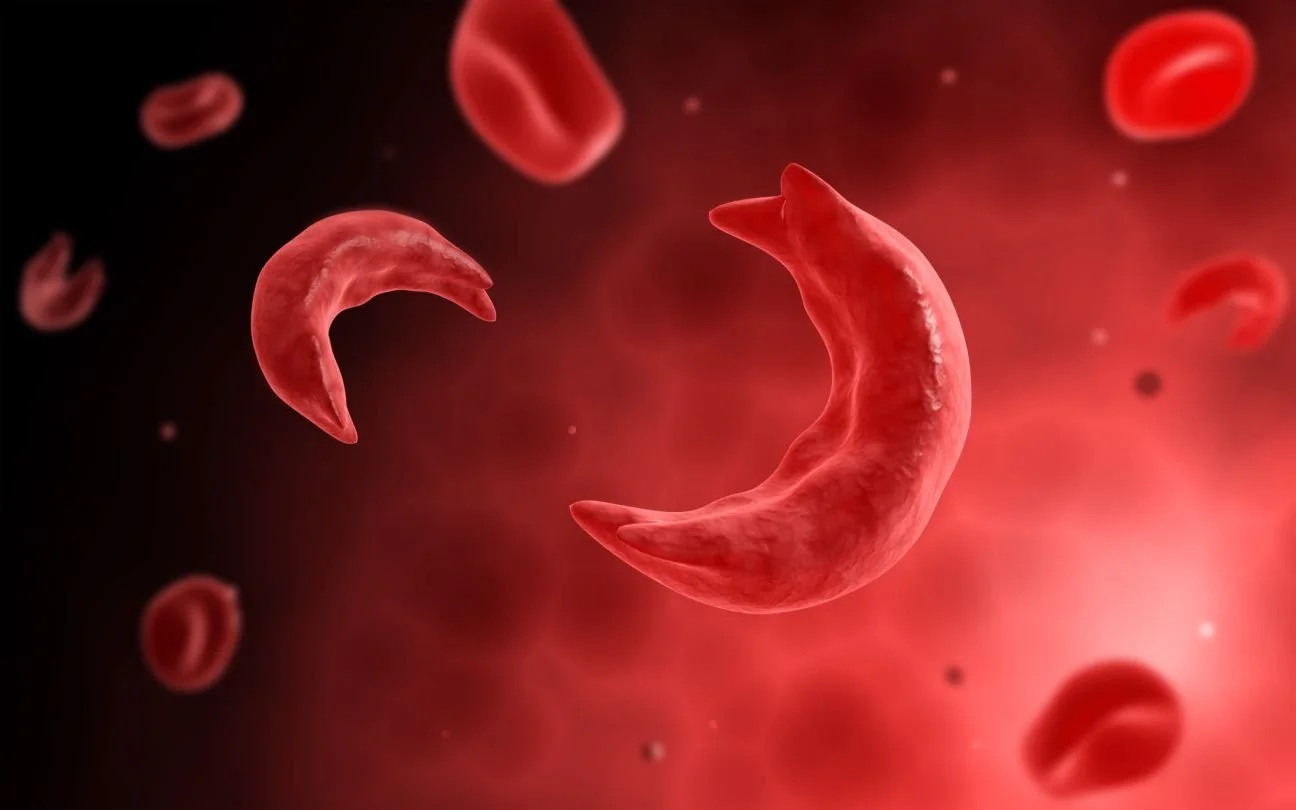
According to CDC projections, Sickle Cell Disease affects about 100,000 Americans, including 3,000 Marylanders, but has gone relatively unnoticed. In truth, we don’t know exactly how many people live with the disease or how many more may be carriers. Too many people are ignorant to the harsh realities of this disease or do not see it as a priority, some even believing inaccurately we’ve long cured Sickle Cell disease given its low profile in our public health landscape, but we have an opportunity to correct these injustices.

Roughly two months remain before the primary election, with early voting starting on July 7 and Election Day arriving on July 19. Who are the candidates on this year’s ballot? The Voice asked each of them to submit a short bio to share their respective backgrounds and priorities.

It’s hard to believe we are once again at the end of another legislation session, the final session of my first term. By the time of this publication, we’ll have adjourned Sine Die and we’ll know a few things — we’ll know if Maryland has the will to finally end child marriage, if we are ready to at last repeal the spousal defense for sexual assault, and if we are going to make record investment in behavioral health services.

It is hard to believe that at this writing we are already in week five of the 2022 session. Bills are dropping daily, over 900 bills have already been read into the House chamber, we’ve had multiple bill hearings and briefings, and I have passed three bills out of committee. Only 15 more to go before the Senate hearings, and of course, the legislative bond initiative hearings when we work to bring money to our local communities and nonprofits for county specific, shovel-ready efforts.

Are speed cameras coming to Severna Park? Is more oversight coming to the Anne Arundel County Board of Education? Maryland lawmakers in the Senate and House of Delegates have 90 days from January through April to lobby for their priorities and pass legislation. While much of the debate during the 2022 legislative session will involve redistricting, whether to spend or save the state’s $2.5 billion budget surplus, and fixing the economy, several proposed bills involve issues specific to Severna Park and the Broadneck peninsula.

January 12, we will gavel in for the 444th Maryland General Assembly session, once again in the shadow of a COVID surge that has taxed our hospital system like never before, and as we not only navigate the challenges of COVID but the necessity and urgency of the people’s work. For anyone who follows my writing, my commitment to behavioral health is no mystery, and with the ever-changing landscape of COVID and the disruptions to so many aspects of our lives, the toll to our constituents in the recovery community as well as those suffering from mental health issues has been significant, and the wave of overdoses and mental health crises is not yet cresting.

For years, as a full-time performer I experienced first-hand the challenge of lack of access to affordable, comprehensive health care; the fear of an illness or injury which could have a catastrophic impact on my livelihood and financial health. The Affordable Care Act was a game changer for so many, providing access to the peace of mind which comes with health coverage, and having the right coverage makes a world of difference for people. However, with the passage of the Affordable Care Act, the gaps in coverage, the challenges of ensuring affordability became more and more clear, and medical bills can quickly mount and create serious problems for patients and their families.

This past November, we commemorated the 20th anniversary of the 9/11 attacks, which have so significantly altered our world. Here in the Baltimore-Washington metropolitan area, we experienced a second wave of terror in October 2002 when, for 22 days, we were threatened by a sniper whose seemingly random acts of destruction were like a living nightmare. Many of us were left trying to make ourselves as small as possible when we saw a white van on the road, or we would walk in a zigzag pattern to fill up at the gas station, checking in by pay phone with friends and family between work and home since for many of us, cellphones, now commonplace, were still something relatively inaccessible in 2002.

Since the elimination of Maryland’s Adult Dental Medicaid Program more than 30 years ago, many Marylanders have muddled through their oral health care needs with inconsistent care, if they receive care at all. Over a period of six years, between 2011 and 2017, Maryland lost 16 of its own citizens to dental cellulitis, an infection of the tooth at its root.

At last, we have arrived in October, and many of the bills which we passed in the General Assembly become law. Among the many laws that went into effect October 1 was a bill that came from this community, the culmination of two and half years of work, research, education, advocacy, debate and compromise: House Bill 132/Senate Bill 41, the Mental Health Access Initiative.
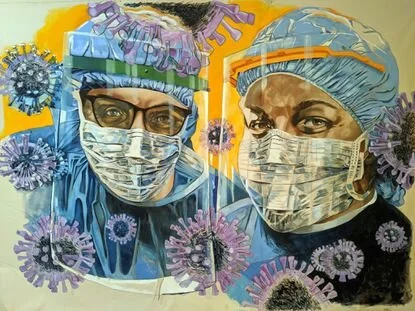
For the last three decades before entering the Maryland General Assembly as your delegate, I worked as a performer, director, arts educator and arts administrator. I taught theater with our Anne Arundel County Public Schools performing and visual arts (PVA) program, a curriculum which I created called “Cultivating Kindness through Theatre Arts,” which uses theater games to teach communication, team building, empathy and compassion.
When the pandemic first hit, I knew that my industry would be one of the first to close and last to return because the arts, and the performing arts in particular, rely on audiences; live theater, though it can be captured onscreen, is simply not the same artform when it is not live.


June is Pride Month, and it couldn’t feel more relevant. My support for pride and for the LGBTQ+ community goes back decades. I’m always loath to tell a story which is not my own, however, as we see a renewed national narrative of anti-LGBTQ+ rhetoric and legislative attacks on gay and transgender rights, in particular dangerous, abusive attacks on our transgender and queer and questioning youth, it becomes all the more important for our LGBTQ+ community to hear and feel support from their elected representatives.

Last year, after multiple meetings not only with these young people but also adults in our community asking for solutions to help keep their children safe following a rash of youth suicides, I introduced the Mental Health Access Initiative, which corrects a troubling disparity between how we address substance use disorder (SUD) and mental illness.

It is hard to believe we are already past the midpoint of a legislative session unlike any other. Working within the constraints of COVID — yet trying to effectively pass meaningful legislation not only reactive to the pandemic but proactive to the future of Maryland all while working in a hybrid system — means that we have to be intentional and strategic.

Delegate Bagnall represents District 33 in the Maryland General Assembly. Her district covers Severna Park, Crofton, and most of central Anne Arundel County. She was first elected in 2018 and currently serves on the Health and Government Operations committee and the Public Health and Long-Term Care subcommittees. She agreed to sit down with the Talon to answer questions about student voices, mental health, and what it is like to be a Delegate.

This is a challenging article to write. Normally this time of year, we talk about our legislative priorities or what we believe to be the hot-button issues, or how we believe the session will go. Given the multiple challenges of a raging pandemic (which has had the knock-on effect of an economic crisis), the stalemate in Congress (which has stalled federal aid essential to our state and local partners), the delays in the rollout of the vaccine essential to our recovery, and the hurdles presented in trying to operate with transparency and engagement in the virtual realm, any one of these topics could easily fill a column. However, I believe as elected officials, we must also speak to the moment. Many of you have heard me before say that words matter, that as representatives, we have a platform and an expectation to speak truthfully and thoughtfully.

We’ve all heard the moral, “Slow and steady wins the race,” the lesson of arguably Aesop’s most famous fable, which tells the story of the Hare, arrogant and fast but ultimately unsuccessful, and the Tortoise, humble and steadfast, whose determination wins the day. There is, however, a rarely discussed secondary lesson in this fable, a lesson that is far more common in our society, and that is the danger of giving up before crossing the finish line. The winner isn’t the one most prepared, best qualified or even most deserving, but the one who finishes the race.

As an elected official, I am exceedingly aware that our words carry weight and that there are times when our constituents look to us to interpret and disseminate information about the decisions we are making. This year we have two important ballot questions that will affect the future of the state of Maryland, which is why I must push back on the advice of my colleague and urge Anne Arundel County voters not to follow the advice of state Sen. Ed Reilly — and instead cast a vote for wider democracy by supporting state ballot Question 1.

In November 2018, I won by 184 votes 10 days after the election. On election night, a local paper called the race for my opponent. I was asked why I wasn’t conceding, and I said because I hadn’t lost yet; I told voters that every vote counts and, therefore, we would wait until we counted every vote. We made history because we showed up.

Every 10 years, we are asked to honor our civic duty and respond to the census. In 2020, we are experiencing a census like no other, one which is essential not only to our recovery but to defining our future as a nation, yet the census doesn’t get nearly the attention it merits.

Every 10 years, we are asked to complete our civic duty and respond to the census, but until I was in office, I never thought about what an impressive, important and, quite frankly, genius endeavor the U.S. census is. As an arts educator, I have a great interest in the story and the thought process of the U.S. census.

It’s difficult to know where to focus these days, with so many challenges created by the pandemic, with so many aspects of our lives impacted - from our health to our ability to move around, pay our bills, care for our children, peacefully assemble, even vote. We are trying to find new ways to make our voices heard, and the frustration and fatigue is very real; the desire to give up, normal. Finding grace has become a daily challenge and, at times, a chore that feels impossible. And even as we are working to find new ways to operate and cope with the mounting stresses of this moment, we are also having a national reckoning about our history, our equity and our national identity.

It’s hard to believe it has been nearly four months since we adjourned the 2020 session, early for the first time since the Civil War. In that brief time, we’ve held our first mostly mail-in election, with lessons learned in preparation for November. We have seen more than 125,000 deaths nationwide due to COVID-19, more than 3,000 of which have occurred here in Maryland. We have seen a renewed call for equity and civil rights, a local surge of the Black Lives Matter movement, and a national reckoning of our nation’s original sin of slavery.

I’ve just completed my second session in office, which ended once again with a history-making Sine Die, this time in the midst of an international crisis. I’m strangely calm. I have written several versions of this month’s column because I think it’s important in this moment to strike the right balance. To discuss local issues or a wrap-up of the legislative session feels inappropriate and blithe, dismissive of the larger picture and massive scale of a crisis, yet with the rapidly changing landscape of this outbreak, anything addressing our strategies today will be obsolete by publication. I know people are also seeking normalcy, but to act as if we are simply returning to normal feels disingenuous and negligent.

We are now in the throes of the 2020 legislative session. This session, expect to hear around 3,000 bills with issues as broad as codifying the protections of the Affordable Care Act, sports betting, criminal justice reform, vaping and e-cigarette regulation, transit projects, public-private partnership regulation, the 100th anniversary of the women’s suffrage movement and, of course, education. So, the challenge is, what should be the focus of this month’s column?

Since 2016, we have seen a renaissance in local activism. I myself ran for office, having no previous political aspirations but concerned for the well-being of my friends and neighbors and looking for a way to give back.

When Severna Park High School students Lauren Carlson, Parker Cross, Sabina Khan, Megan Moulsdale and Katrina Schultz united in spring 2019 to make a statement about the need for mental health awareness in their community, they had no way of predicting the momentum their advocacy would gain.

As we prepare for the upcoming legislative session, during which education will be a large component of our agenda, I thought it appropriate to return to my wheelhouse and take a deep dive into the essential nature of arts in education.

I grew up in Cape St. Claire, and when I was a child, I thought the distance to New York City and the distance to Ocean City were the same because it took the same amount of time to get each. Four hours. That’s how long we would sit in holiday traffic, stewing in our amber station wagon on our sojourn to sea and salt air.